Watch this for a nervous laugh but a good one!

Saturday, July 4, 2015

Thursday, July 2, 2015
LDV Pilot and Convoy vans - Basic advice on replacing the kin pins
How and what tools do you need to replace the king pins on a Pilot or a Convoy LDV van?
In 2 posts, quoting from auto banter:
In 2 posts, quoting from auto banter:
| |||
 LDV pilot - convoy
Whats the going rate for a king pin change - mine needs doing and I
swore blind never to do another myself ;-) Also, is front axle same off convoy, can get a complete one with new pins for £100.. seems like a much nicer option! |
 October 12th 09, 10:32 PM posted to uk.rec.cars.maintenance | |||
| |||
| LDV pilot - convoy
Pins are only £29.. which makes up for the fact you either take the axle
off and take it somewhere with a press, or spend three days with a sledge hammer beating the fcuk out of it... |
(3 days? Some say a week)
Wednesday, July 1, 2015
LDV vans forum - Alive and quicking!
About 3 years ago when I got my Pilot I used to look up two forums set up by LDV vans, sherpas etc owners and lovers. These were the only forums available online and were very useful.
Unfortunately soon after I joined they all disappeared. I took up the task to set them back up and archive some of the best tips and most useful conversations on the then newly set up fb LDV groups.
My archiving was slow as it takes a lot of time to search on the fb group page for posts that keep disappearing in the scrolling down system (*#@%$?!!!).
However few admins from the ex-sites took over and slowly but surely new members registered.
I was delighted today to see that it's well alive and quicking!
LDV lovers, Join up our forum!
http://ldvsherpauk.prophpbb.com
The advantages over fb is that you can look up the infos without having to scroll down for ghost-posts (I'm gonna call them that), it's always there for you. The search option is much easier to use than fbook.
Thanks again to the admins who are taking care of the forum.
Why driving on the left? or on the right?
That is ze question.
I always wondered the reason why different countries would have a different system on the road.
Apart from the usual frog/rosbeef jokes no one ever could tell me.
Thank to the instructor in the bicycle mechanic course I undertook this month,
I now know and thanks to internet I now can tell and share.
In this article, it explains why do the British drive on the left?
in brief this is why:
"In the Middle Ages you kept to the left for the simple reason that you never knew who you'd meet on the road in those days. You wanted to make sure that a stranger passed on the right so you could go for your sword in case he proved unfriendly."
In France Napoleon's successful attack strategies and his massive ego are responsible for France and its colonies to have kept the driving on right system.
Thursday, June 25, 2015
LDV vans Sherpa Pilot Convoy - No MOT etc - Don't scrap them!
Yet another post on our dear Club LDV social network group from Matt who writes:
"Going to the scrap yard in the sky on Saturday its a shame other than the rust not much else wrong with it but cant afford to keep it on the road any more 😢 "
Please! Dont scrap!
Save the parts for us! We ll make them last another half century!!
And surely you'll make more than this ridiculous amount of money due to the crash of metal s worth itself due to speculative (capitalist) fuckers in power all around the world. Scrapping means sending this good steel to China so it comes back in the form of utterly useless items of miserable quality (otherwise called shite).
Come on! Make a few quids, bypass "supporting already rich fuckers" and recycle the good things for the people who take care of it, make it last and therefore make our planet and life sustainable! (uff I needed to say that).
Come join the Club LDV group and get recycling!
Wednesday, June 17, 2015
Diagnosing head gasket symptoms - Head gasket failure types
Someone I know was worried the head gasket in their car had blown.
That's usually a right reason to worry as this gasket plays a major role in the running of the engine and usually entails costly repairs.
I look for some informations as to how to understand why it happens and how it happens.
This link explains the various head gasket failure types and this one gives infos about blown head gasket symptoms.
Hope that helps!
Sunday, June 14, 2015
How a car works guide!
Here is a good guide on how a car works with 24 articles on the basics of car mechanic, body work and everything you need to know about your vehicle if you want to learn or try a little or a lot of DIY repairing!
There is also many more articles (288 in total) accessible for free from the front page of the howacarworks website.
You can see them all at a glance on this page.
Enjoy!
There is also many more articles (288 in total) accessible for free from the front page of the howacarworks website.
You can see them all at a glance on this page.
Enjoy!
Tuesday, June 9, 2015
Gypsy Roma Traveller Police Association
An initiative to fight against discrimination of travellers I found online:
"The GRTPA is a support network for Police Personnel who are from a GRT background. We are a National organisation but our reach is international as we aim to link in with our Police colleagues from around the world.
The GRTPA’s main aim is to unite and support all Police Officers and Staff who are from GRT background. We will do this by promoting equality and fairness and by providing a support forum where members can share and discuss the issues which affect their working life.
Intrinsically linked to our main aim is the desire to foster good relationships between the Police and GRT Communities. We aim to do this by facilitating discussion, negotiation and co–operation between UK Police Forces, GRT communities and organisations. In doing so, we will establish a platform for sharing good practice in working with GRT Communities."
Saturday, June 6, 2015
A 10-Story Former Shoe Factory Transformed into the Ultimate Urban Playground
source

"Housed in the former home of the 10-story International Shoe Company, the sprawling 600,000 square-foot City Museum in St. Louis is quite possibly the ultimate urban playground ever constructed. The museum is the brainchild of artist and sculptor Bob Cassilly who opened the space in 1997 after years of renovation and construction. Although Cassilly passed away in 2011, the museum is perpetually under construction as new features are added or improved thanks to a ragtag group of 20 artists known affectionately as the Cassilly Crew."
read more
on native americans 20th century education
I can't resist archiving some posts here that have nothing to do with LDV vans but hey there's more than this to life.
Starting with this terrifying one on
TWENTIETH-CENTURY EDUCATION FOR NATIVE AMERICANS RESIDENTIAL SCHOOLS
source
“I want to get rid of the Indian problem. I do not think as a matter of fact, that the country ought to continuously protect a class of people who are able to stand alone… Our objective is to continue until there is not a single Indian in Canada that has not been absorbed into the body politic and there is no Indian question, and no Indian Department, that is the whole object of this Bill.” Dr. Duncan Campbell Scott - 1920
read more
Sunday, May 31, 2015
Posts and comments for advices on LDV vehicles
Dear readers!
Many thanks for your praises and comments. I have to apologise for not being able to answer all your questions. I'd love to be able to keep up with them but I have neither time nor expertise for it.
I direct you once more to the excellent and ultra friendly social network groups I turn to for advice. I recommend these two for the best advice, banter and learning together:
Club LDV
and
Club LDV/Freight Rover Convoy/Sherpa/Maxus/Pilot/Cub, Van/Camper/Day van
You take care
Enjoy the LDV beast,
Yours faithfully.
Saturday, May 2, 2015
LDV Pilot van love :)
This is what I found cruising randomly on the web.
A sweet few nicely done webpages about a LDV Pilot from 2002 with good images
I had to feature it here.
Thank you Timothy Birt.
It also has a wealth of information about sustainable energy (campervanners!boaters!) and much more.
It also has a wealth of information about sustainable energy (campervanners!boaters!) and much more.
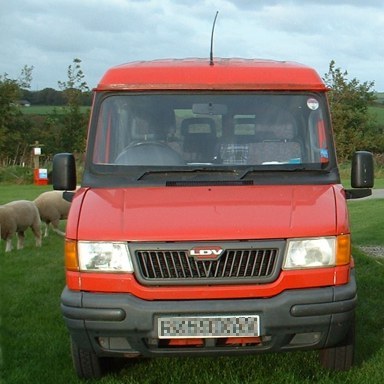
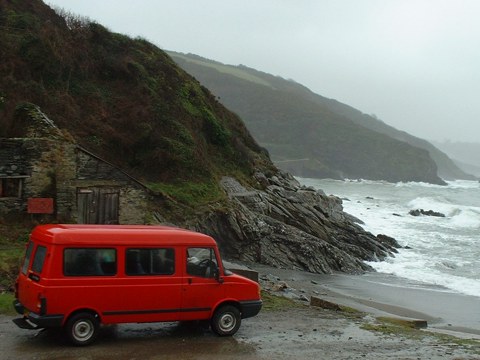
(All credits for images and website to Timothy Birt)
Monday, March 2, 2015
A guide to changing your diesel vehicle's engine oil
This very well illustrated article will show you how to replace the oil in your diesel engine.
Read it on the brilliant enginebasics.com website
along with this article explaining the importance of clean oil in your engine.
Read it on the brilliant enginebasics.com website
along with this article explaining the importance of clean oil in your engine.
Learn the basics of diesel engine maintenance
I found this very clear article which lists and explains what minimum basic maintenance should be done on a diesel engine,
read below or read the full article here on fourthgen.net.
"Changing the lubricating oil - This is usually necessary on a more frequent basis than gasoline engines - generally every 3000 miles
Changing the air filter - Since diesel engines experience high intake pressures, the air filtering system is important to not only filter media but also to cool the air.
Changing the oil filter - while a gasoline engine may give less mileage or performance with a dirty fuel filter, this can be more serious in the case of a diesel engine where dirty fuel can damage a diesel engine's fuel injection system. The filter should meet or exceed the standards suggested by manufacturer so that sulphur and carbon residue are removed. Synthetic oil is also recommended.
Early warning system - The early warning system that warns of engine overheating should be checked for functionality. A gasoline engine if overheated can be shut off, cooled down and restarted. However if a diesel engine gets overheated, it will be damaged.
Changing the fuel filter - It is important the change the fuel filter as recommended by the manufacturer in order to prevent condensation from building up and getting into the fuel injectors. The fuel tank should also be kept full to avoid moisture forming.
Gaskets should be checked and replaced on all critical areas especially in the combustion mounting areas and coolant hoses.
Bleeding the fuel system - While some diesel engines have self bleeding systems, others which do not, need to have the fuel system bled to get a steady air free flow of fuel. This becomes necessary after any of the following situations have occured. Running out of fuel.
2. If fuel shut off valve is left closed and engine runs out of fuel.
3. Replacing fuel filter.
4. Fuel injector nozzle or injector pump repair.
5. After repairing or replacing any fuel line.
6. Before putting engine back into service in the spring, if fuel system has been drained.
7. Replacement of electric or mechanical fuel pump.
8. Any time air is permitted to enter the fuel system.
Draining the water separators - Since diesel fuel absorbs water more than gasoline, it can get contaminated very easily. Therefoer most diesel engine vehicles have a water separator that collects water from fuel. This water needs to be drained regularly from the separator using a drain valve called a petcock. Some water separators are self-draining.
Glow plugs - Glow plugs enable a diesel engine to get heated for combustion to take place. After prolonged use, these can wear out and may need to be replaced.
Installing an engine heating kit for diesel engines are especially useful in winter when diesel engines are hard to start. This saves fuel and prolongs the life of the diesel engine while cutting down on exhaust emissions. It also eliminates the need for idling which cause wear and tear on the internal parts of a diesel engine not to mention unnecessary fuel consumption."
I collected a few more links on the topic:
http://www.carsdirect.com/car-repair/9-top-diesel-engine-maintenance-tips
http://www.automotivetroubleshootingsecrets.com/diesel_maintenance.html
http://answers.practicalaction.org/our-resources/item/diesel-engine-repair-maintenance
(This website looks amazing)
and finally if you are into boating, there is a course in Brighton:
http://www.lagoon.co.uk/shore-based-courses/course/diesel-engine-maintenance-course/135
Friday, February 20, 2015
How the biggest diesel marine engine in the world works!
Another post about how engines work, diesel engines with a short documentary about the most powerful diesel marine engine in the world.
Skip forward to about 2:05 to see the piston in action of this 2000 tonnes marine engine
and understand how internal combustion engines function.
Skip forward to about 2:05 to see the piston in action of this 2000 tonnes marine engine
and understand how internal combustion engines function.
How an internal combustion engine works - Old Ford engine example
I really enjoy learning and understanding how these old internal combustion engines work.
This video presents a Ford motor that has been opened up for people to see how it works.
Enjoy!
Friday, January 23, 2015
Replacing the accelerator cable tutorial
The mystery of the slowest van is finally solved.
The cable of my LDV Pilot van snapped off the other night while I was driving.
I rang Channels Commercials but they didn't have it in stock and offered to order it for early next week.
I needed the van operational for Saturday morning so it wasn't good enough. I rang KSL garage services who didn't have it either but directed to LDV Parts. They had it and could deliver on friday morning.
When I bought the van 2 years ago I was told its only downside was that it had been fitted with a speed-limiter and sometimes would run slow. It didn't do it when I test drove it.
Then it was getting slower and slower. Driving was harder and harder too as I had to press the gas pedal hard t get the van to pull its own weight only. I tried changing the oil filter but nothing much happened. It was getting slower. I heard about some of these vans had been fited with long rear axles to protect the gearbox (exRM van) which requires double work from the engine.
When I changed the cable today I tried it out and to my surprise the van is very responsive and fast... as should be I guess... It's like having a new van! No more gym work for my right leg.
Here is a tutorial on how to replace the accelerator cable. It's an easy enough task.
First I unscrewed this part to let the cable loose with spanner 9 or 10 (metric system. Correct me if I'm wrong on this.)


First I unscrewed this part to let the cable loose with spanner 9 or 10 (metric system. Correct me if I'm wrong on this.)
It's a bit tricky to take off and fit back the cable end from the (beige) plastic part
(which is not supplied with the new cable = breaking it is not an option).
What worked for me is to hold back the spring and push down the end. This released the cable.

I removed the accordeon pipe (2 philips head screws)
to access the nuts seen on the next blurry pics.
It also has a rubber ring (LDV S&M).
Inside the cabin,
I unmounted the nuts holding the gas pedal to release the cable from it.
Never mind the spring. Just replace it as is when mounting back.
Have a good look at how the cable end fits in the slots on top of the head of the pedal.
The cable end looks like a bicycle one.
Can't recall the nuts size but i reckon was between12 and 15.
I used these (cheapest I could get) tools but it'd be better to use shorter deep sockets.
This is the old cable's rubber housing. It was well bent and snapped.
Let's admire both beautiful ends of the rubber housing.
Here is where the cable clips in and goes from boot to cabin.
I filed the hole in the body to make it go through the body.
Perhaps a better idea is to slighlty file the cable end as it seems it had been done on the old cable
but I chose no to take the risk to overdo it and to not be able to fit it correclty afterward.
Hope that helps.
If you have any question please post it in the comment.
I can't always reply as I'm a busy bee but take a look at this page for suggestions to get support from the international online LDV community.
Enjoy your LDV Pilot van ride!
Tuesday, October 21, 2014
Body and Chassis - Automobile History
source: http://www.motorera.com/history/hist09.htm
I am spending some time under the van because I'm installing a towbar.
It got me thinking of the rarely seen part of cars and vans that's holing it together, the chassis. There I found an educative article on the subject.
"Unlike the first engine and chassis builders, who had no precedents to follow, the first auto body engineers represented an old established craft. It mattered little to them whether vehicles were to be propelled by a gasoline engine, electric power, or steam. Their task was the same as in the days of chariots: to construct a conveyance that would carry people.
The body builders contended that if carriages were good enough for horses, they were good enough for engines. They were even given carriage names -- phaeton, brougham, tonneau, landaulet, and wagonette.
Don't get the idea that early body engineers were a stodgy conservative bunch. When it came to trying new structural concepts and materials, they were as radical as the engine and chassis guys -- so much so, in fact, that practically every body structural technique in use today had been tried by 1920, even gluing bodies together. (...)"
read more
Wednesday, October 15, 2014
Subscribe to:
Posts (Atom)