
Showing posts with label diesel. Show all posts
Showing posts with label diesel. Show all posts
Monday, March 2, 2015
Learn the basics of diesel engine maintenance
I found this very clear article which lists and explains what minimum basic maintenance should be done on a diesel engine,
read below or read the full article here on fourthgen.net.
"Changing the lubricating oil - This is usually necessary on a more frequent basis than gasoline engines - generally every 3000 miles
Changing the air filter - Since diesel engines experience high intake pressures, the air filtering system is important to not only filter media but also to cool the air.
Changing the oil filter - while a gasoline engine may give less mileage or performance with a dirty fuel filter, this can be more serious in the case of a diesel engine where dirty fuel can damage a diesel engine's fuel injection system. The filter should meet or exceed the standards suggested by manufacturer so that sulphur and carbon residue are removed. Synthetic oil is also recommended.
Early warning system - The early warning system that warns of engine overheating should be checked for functionality. A gasoline engine if overheated can be shut off, cooled down and restarted. However if a diesel engine gets overheated, it will be damaged.
Changing the fuel filter - It is important the change the fuel filter as recommended by the manufacturer in order to prevent condensation from building up and getting into the fuel injectors. The fuel tank should also be kept full to avoid moisture forming.
Gaskets should be checked and replaced on all critical areas especially in the combustion mounting areas and coolant hoses.
Bleeding the fuel system - While some diesel engines have self bleeding systems, others which do not, need to have the fuel system bled to get a steady air free flow of fuel. This becomes necessary after any of the following situations have occured. Running out of fuel.
2. If fuel shut off valve is left closed and engine runs out of fuel.
3. Replacing fuel filter.
4. Fuel injector nozzle or injector pump repair.
5. After repairing or replacing any fuel line.
6. Before putting engine back into service in the spring, if fuel system has been drained.
7. Replacement of electric or mechanical fuel pump.
8. Any time air is permitted to enter the fuel system.
Draining the water separators - Since diesel fuel absorbs water more than gasoline, it can get contaminated very easily. Therefoer most diesel engine vehicles have a water separator that collects water from fuel. This water needs to be drained regularly from the separator using a drain valve called a petcock. Some water separators are self-draining.
Glow plugs - Glow plugs enable a diesel engine to get heated for combustion to take place. After prolonged use, these can wear out and may need to be replaced.
Installing an engine heating kit for diesel engines are especially useful in winter when diesel engines are hard to start. This saves fuel and prolongs the life of the diesel engine while cutting down on exhaust emissions. It also eliminates the need for idling which cause wear and tear on the internal parts of a diesel engine not to mention unnecessary fuel consumption."
I collected a few more links on the topic:
http://www.carsdirect.com/car-repair/9-top-diesel-engine-maintenance-tips
http://www.automotivetroubleshootingsecrets.com/diesel_maintenance.html
http://answers.practicalaction.org/our-resources/item/diesel-engine-repair-maintenance
(This website looks amazing)
and finally if you are into boating, there is a course in Brighton:
http://www.lagoon.co.uk/shore-based-courses/course/diesel-engine-maintenance-course/135

Saturday, October 11, 2014
How does a car battery works?
I am trying to stop assuming that I understand how things work so I do a bit of research on everything I admit I don't know or understand! Crazy endless quest I reckon.
A friend recently had to replace the starter battery on his narrow boat (Listel engine SR2 from the 70's). I found out that he needed a 90Ah/900v starter battery only (not leisure or both use) and which should be the same as his leisure battery, meaning they must both be either sealed or flooded (this will help recharging correctly and ensure a longer life for the batteries).
"when it comes to starter batteries it the cold cranking capacity that the factor here. A cranking motor can draw 300 amps or so when cranking and in winter a cold engine can take some turning. Cold cranking capacity is not the same as the ampare hour rating. However the so common 110 AH batteries will do it. Generally speaking Deep cycles don't work so well a cranking batteries when weather is cold but nothing else can be found these will do. Most battery suppliers with give both AH capacity and cold cranking capacity in amps marked CCA."
(for the boaters and vanners)
"A lot of car batteries are now the sealed type , make sure you get the same as your leisures , either sealed or flooded .
Why would it matter if it was the same type as the domestic/leisure batteries?
answer: When charging from the alternator a sealed will take 14.4 , flooded 14.8 , the alternator will either stop charging at less than 14.4 so your leisures are not getting a full charge or you run the risk of overcharging the starter if it goes up to 14.8"
I found an interesting article entitle Car battery explained with a few explanatory inages such as these:

 and tips like "Temperature
matters! Heat kills car batteries and cold reduces the available
capacity."
and tips like "Temperature
matters! Heat kills car batteries and cold reduces the available
capacity."
"
Cranking power:
As the temperature drops, the cranking power required by the car increases. However, as more cranking power is used, the amount of battery power available decreases. Cold Cranking Amps (CCA) is critical for good cranking ability. It refers to the number of amps a battery can support for 30 seconds at 0°F until the battery voltage drops to unusable levels. For example, a 12 volt battery with 600 CCAs means the battery will provide 600 amps for 30 seconds at 0°F before the voltage falls to 7.20 volts (three cells). The higher the CCA, the more powerful the cranking ability.
If you live in a cold climate, you should consider the CCA rating when choosing a battery. If you live in a very hot climate, you don't need as much CCA."
"An Amp (or Ampere's) is the stand unit that current is measured at. If there is a 1 volt drop across a 1 ohm resister, then 1 Amp is drawn. This formula is know as 'Ohms Law'. However an Amp is a BIG unit, for smaller electronic devices (i.e. computers) its usually measured as milliamps (mA) which is 100 th of an Amp."
The FAQ at the bottom of the article sums it up well.
"
What should I consider when buying a battery?
SIZE: What are the dimensions of your original battery? Will it fit into my battery tray?
POWER: What are the Cold Cranking Amps (CCA) required to power your vehicle?
WARRANTY: Automotive batteries are backed by a warranty package. Chose what is right for your vehicle's needs.
When I am replacing my battery or cleaning the terminals, why is it important to remove the ground wire first?
Before you start, always check the type of grounding system the vehicle has. If you remove the positive connector first in a negative ground system, you risk the chance of creating a spark. That could happen if the metal tool you're using to remove the positive terminal connector comes in contact with any piece of metal on the car. If you are working near the battery when this occurs, it might create an ignition source that could cause the battery to explode. It's extremely important to remove the ground source first.
What does CCA mean?
Cold Cranking Amps is a rating used in battery industry to define a battery's ability to start an engine in cold temperatures. The rating is the number of amps a new, fully charged battery can deliver at 0° Fahrenheit for 30 seconds, while maintaining a voltage of at least 7.2 volts, for a 12 volt battery. The higher the CCA rating, the greater the starting power of the battery.
How do I safely jump start my battery?
There is a particular sequence which should be followed. This reduces the risk of short circuiting the battery and damaging your alternator etc. The sequence is as follows.
When a battery is charging a chemical reaction is present. This produces a waste product, which is flammable gas. When you connected the last jump lead up to the dead car, there should be a spark (generated from the good battery). You want this spark as far away as possible from the battery. Otherwise there is a possibility that the gas will ignite and the battery could burst! Which means your hands could be covered in sulphuric acid!
See the news snippet on the left . Unfortunately any spark or naked flame can ignite the flammable gas. Which in this persons case has now lead him to hospital with burns to his face and hands.
What difference is there between a petrol car battery and a diesel one?
Not much, only the storage capacity of diesel batteries are much bigger, hence they are physically a bit larger. Plus they have a higher CCM so they seem to last longer."
source: topbuzz.co.uk
Here are a few more links if you want to learn further. I usually need to read 10 times the same thing to get it in(!!)
One to understand how Volts, watts & amps work for batteries.
One about the different types of batteries, starting batteries, deep cycle batteries.
And a quick video from engineering explained (youtube channel) for the lazy reader or those for whom images and sound work better - but i warn you it's a bit far fetched... hopefullyi find something more straight forward soon...
If you find one post it in a comment please!
And a good article from my friend on leisure batteries for caravaning, boating, marine purpose more specially (approved and recommended by ilve-on boaters I'm in touch with!).
Lastly an article to correlate the previous one on leisure batteries structures and batteries systems in general.
A friend recently had to replace the starter battery on his narrow boat (Listel engine SR2 from the 70's). I found out that he needed a 90Ah/900v starter battery only (not leisure or both use) and which should be the same as his leisure battery, meaning they must both be either sealed or flooded (this will help recharging correctly and ensure a longer life for the batteries).
"when it comes to starter batteries it the cold cranking capacity that the factor here. A cranking motor can draw 300 amps or so when cranking and in winter a cold engine can take some turning. Cold cranking capacity is not the same as the ampare hour rating. However the so common 110 AH batteries will do it. Generally speaking Deep cycles don't work so well a cranking batteries when weather is cold but nothing else can be found these will do. Most battery suppliers with give both AH capacity and cold cranking capacity in amps marked CCA."
(for the boaters and vanners)
"A lot of car batteries are now the sealed type , make sure you get the same as your leisures , either sealed or flooded .
Why would it matter if it was the same type as the domestic/leisure batteries?
answer: When charging from the alternator a sealed will take 14.4 , flooded 14.8 , the alternator will either stop charging at less than 14.4 so your leisures are not getting a full charge or you run the risk of overcharging the starter if it goes up to 14.8"
I found an interesting article entitle Car battery explained with a few explanatory inages such as these:


"
Cranking power:
As the temperature drops, the cranking power required by the car increases. However, as more cranking power is used, the amount of battery power available decreases. Cold Cranking Amps (CCA) is critical for good cranking ability. It refers to the number of amps a battery can support for 30 seconds at 0°F until the battery voltage drops to unusable levels. For example, a 12 volt battery with 600 CCAs means the battery will provide 600 amps for 30 seconds at 0°F before the voltage falls to 7.20 volts (three cells). The higher the CCA, the more powerful the cranking ability.
If you live in a cold climate, you should consider the CCA rating when choosing a battery. If you live in a very hot climate, you don't need as much CCA."
"An Amp (or Ampere's) is the stand unit that current is measured at. If there is a 1 volt drop across a 1 ohm resister, then 1 Amp is drawn. This formula is know as 'Ohms Law'. However an Amp is a BIG unit, for smaller electronic devices (i.e. computers) its usually measured as milliamps (mA) which is 100 th of an Amp."
The FAQ at the bottom of the article sums it up well.
"
What should I consider when buying a battery?
SIZE: What are the dimensions of your original battery? Will it fit into my battery tray?
POWER: What are the Cold Cranking Amps (CCA) required to power your vehicle?
WARRANTY: Automotive batteries are backed by a warranty package. Chose what is right for your vehicle's needs.
When I am replacing my battery or cleaning the terminals, why is it important to remove the ground wire first?
Before you start, always check the type of grounding system the vehicle has. If you remove the positive connector first in a negative ground system, you risk the chance of creating a spark. That could happen if the metal tool you're using to remove the positive terminal connector comes in contact with any piece of metal on the car. If you are working near the battery when this occurs, it might create an ignition source that could cause the battery to explode. It's extremely important to remove the ground source first.
What does CCA mean?
Cold Cranking Amps is a rating used in battery industry to define a battery's ability to start an engine in cold temperatures. The rating is the number of amps a new, fully charged battery can deliver at 0° Fahrenheit for 30 seconds, while maintaining a voltage of at least 7.2 volts, for a 12 volt battery. The higher the CCA rating, the greater the starting power of the battery.
How do I safely jump start my battery?
There is a particular sequence which should be followed. This reduces the risk of short circuiting the battery and damaging your alternator etc. The sequence is as follows.
- Switch off the dead car and ensure all other electric devices (i.e. head unit) are switched off. Position the dead car and the good car close to each other, but NOT touching each other (could course a short circuit when jump starting).
- Connect one end of the red jump lead to the positive (+) terminal on the dead battery.
- Connect the other end of the red jump lead to the positive (+) terminal on the good battery.
- Connect one end of the black jump lead to the negative (-) terminal on the good battery.
- Connect the other end of the black jump lead to the chassis or large bolt/nut/bracket on the engine. Anywhere away from the negative terminal of the dead battery. Do NOT connect it to the negative terminal (-) of the dead battery (explained why latter).
- Ensure that none of the jump leads will come in contact with any rotating or moving parts in the engine bay. Switch on the good car and let it idle for a few minutes. This will allow the two batteries voltages to 'settle' and the alternator to do its job.
- Start the dead car, hopefully as the batteries are now connected in parallel, there is twice the amount of current available to turn the engine over. Once running disconnect the jump leads in the opposite order of connection.
When a battery is charging a chemical reaction is present. This produces a waste product, which is flammable gas. When you connected the last jump lead up to the dead car, there should be a spark (generated from the good battery). You want this spark as far away as possible from the battery. Otherwise there is a possibility that the gas will ignite and the battery could burst! Which means your hands could be covered in sulphuric acid!
See the news snippet on the left . Unfortunately any spark or naked flame can ignite the flammable gas. Which in this persons case has now lead him to hospital with burns to his face and hands.
What difference is there between a petrol car battery and a diesel one?
Not much, only the storage capacity of diesel batteries are much bigger, hence they are physically a bit larger. Plus they have a higher CCM so they seem to last longer."
source: topbuzz.co.uk
Deep Cycle Batteries
The difference between deep cycle batteries and more traditional lead acid car batteries is that deep cycle batteries use much thicker lead and lead dioxide plates. This diminishes the surface area on which the chemical reaction can occur. It gives the battery the ability to discharge over and over, but diminishes its ability to produce a lot of power over a short time.Here are a few more links if you want to learn further. I usually need to read 10 times the same thing to get it in(!!)
One to understand how Volts, watts & amps work for batteries.
One about the different types of batteries, starting batteries, deep cycle batteries.
And a quick video from engineering explained (youtube channel) for the lazy reader or those for whom images and sound work better - but i warn you it's a bit far fetched... hopefullyi find something more straight forward soon...
If you find one post it in a comment please!
And a good article from my friend on leisure batteries for caravaning, boating, marine purpose more specially (approved and recommended by ilve-on boaters I'm in touch with!).
Lastly an article to correlate the previous one on leisure batteries structures and batteries systems in general.
Monday, March 11, 2013
Saturday, March 2, 2013
LDV Pilot van - under the snow


That wasn't its favourite season. Despite a lot of Pilot's owners who claim this van always starts up, mine found it difficult under cold and wet conditions. I changed the battery to a new one but it still had troubles. I guess it's got to do with the heads not heating up properly. Something in the electrics?
Needs to be investigated further...
Sunday, February 10, 2013
Friday, February 8, 2013
LDV Pilot van - spare, Replacement Key
http://www.autolocksmithstockport.co.uk/cars/ldv
http://www.bancroftlocksmiths.co.uk/
http://www.bancroftlocksmiths.co.uk/
LDV - random knowledge on common faults and more
Help! I have an ex Post Office LDV Pilot with an immobiliser.
kingpins!!!!!!! new or pack with grease

History
LDV
LDV is a famous UK van manufacturer, located
in the Drews lane area of Wolseley, Birmingham, England. It was a part
of the British Leyland/Rover Group empire and was the latter's Freight
Rover arm of the Land Rover Group division. It was officially known as
LDV Limited after its merger with Leyland Trucks and DAF Trucks in 1987.
The company manufactures various panel vans, pick-ups and minibuses.
These vehicles are available with various modifications and
specifications. The Convoy and Pilot panel vans were amongst the first
modified versions of Leyland DAF 400 Series of vehicles. They were
produced between 1997 and 2006. The convoy was available as 2.8 tonne,
3.1 tonne and 3.5 tonne variants with load volume capacities of up to
12.9 cubic metres. The pilot was made available in capacities ranging
from 2.2 to 2.6 tonnes in a 5.7 cubic metre load area. Both these vans
were immensely popular as a minibus and would come as pick-up and fleet
based vans. These vans were replaced by an LDV van, the Maxus. Maxus van
was launched in 2005 and was awarded the Professional Van and Light
Truck Magazine ''Van of the Year 2005'' title. It is available in two
wheelbases, three roof heights and a choice of 2.8t, 3.2t and 3.5t GVW.
It is being used on fleet basis by companies such as Transco, Royal Mail
and various UK police services. The company had also produced a small
van named LDV Cub that was produced from 1996 until 2001. It was popular
with small businesses such as plumbers, gardeners and electricians. The
company also provides services and insurance for LDV Maxus and other
LDV cars.
Big Brother Maxus:
http://dudleyinvestigatesldv.wordpress.com/
(on LDV Pilot vans) "Rads block, if they overheat it normally wrecks the cylinder head, Rad
fan switches fail, kingpins wear out quickly, shock bushes are always
wearing out, steering boxes wear and leak, gearboxes can give problems
with crunchy gears etc, diff seals leak, wiper linkages wear out and
leak water into cab and your forever banging your elbow on the door."

Tuesday, August 28, 2012
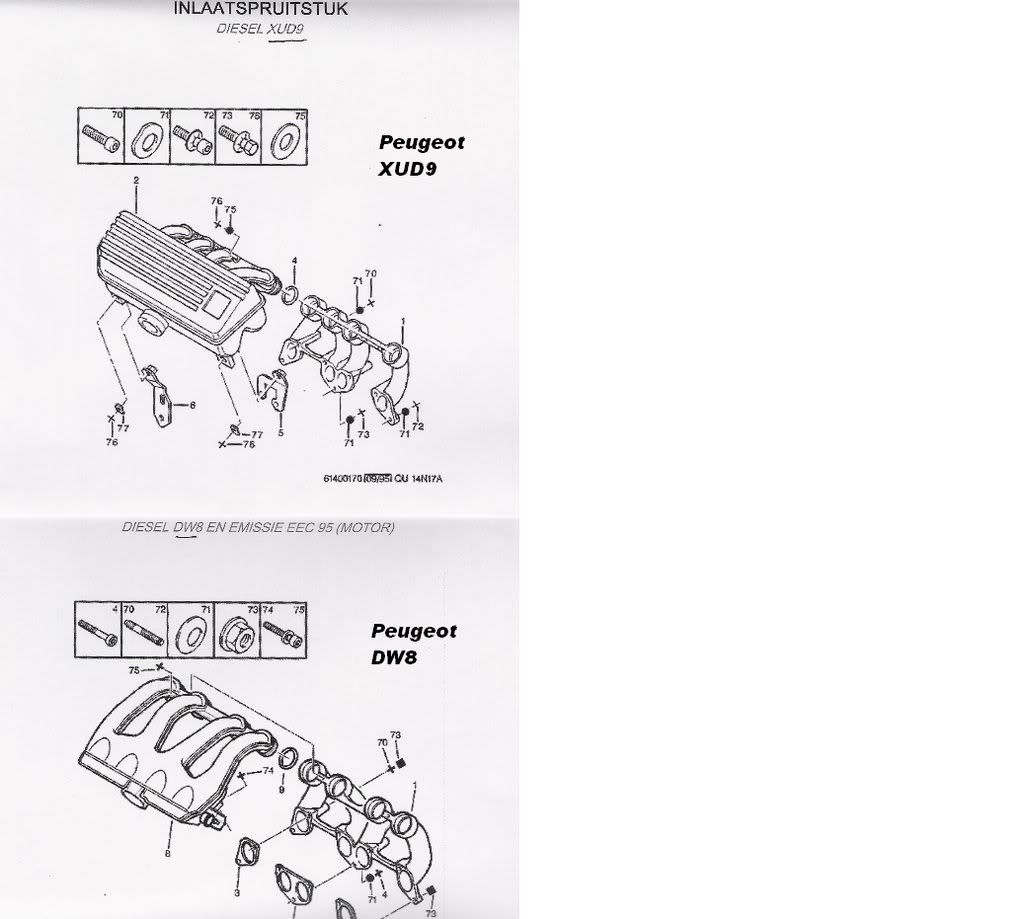
LDV Pilot DW8 and XUD9 engines

Lots of technical infos
Peugeot forum

Forum talk
"I have heard several times that the DW8 engine (1868cc) looks identical to the XUD9 engine (1905cc). They differ in the intake manifolds, that is one way to tell them apart.
Peugeot did not make a turbo version of the DW8, but it is availabel on the XUD9.
I am guessing that IF IF IF the intake manifold of a XUD9 diesel engine would fit on a DW8 engine block, then you would have the option to add a turbo as well."

Saturday, August 11, 2012
LDV Pilot van Parts - What does it look like? - Post 1
Power steering pump, Starter motor, Water pump...
More to come.
If you are wondering what they do, check out this site which explains how engines work.
 |
| Power steering pump for LDV pilot van |
 | |
|
 |
| Starter motor for LDV pilot van |
 | |
|
 |
| Water pump for LDV pilot van |


Engine as it was


"With fuirther investigation I read today that THERE IS some differences between the 2001 and prior years to the LDV pilot 2002. Apparently LDV put DW8's in the last few Pilots made instead of the XUD9A, and you can tell the difference because the oil filter is on the back of the engine on the Pilot's XUD, and on a DW8 it's between the manifolds on the top of the engine. A friend of mine beleives that LDV probably did this because of the shift to EURO III emissions standards, but would have had to have fitted any 2002 LDV pilots with an EGR valve and probably would comply to the LEZ regulations also. " source
Friday, August 10, 2012

Basic car maintenance every driver should know
If you don't know much about cars but drive one every or almost every day,
I'd recommend and encourage you to watch that video.
That mechanic has (a high pitch voice that can be annoying) a good point.
I'd recommend and encourage you to watch that video.
That mechanic has (a high pitch voice that can be annoying) a good point.
Test drive and Checklist - Buying (and selling)
Here is a compiled checklist for the used car buyer.
These are more like notes than a practical checklist but you could make one up for yourself from the notes and take it with you as you go see a vehicle.
Meanwhile watch this video
These are more like notes than a practical checklist but you could make one up for yourself from the notes and take it with you as you go see a vehicle.
USED CAR BUYER CHECKLIST
Questions to a private seller:
- How many miles on the odometer?
- Why are you selling?
- How would you describe the condition of the car?
- Who was the previous owner?
- What kind of oil do you use in the car?
- Where was this vehicle bought from?
- What are you willing to sell the car for?
- How long a test drive can I take?
- Are you willing to let me get this inspected independently?
- What's the last used car you sold?
- Any accidents?
- Do you have the log book?
CHECKLIST
- Oil leak where van is parked? (= possible clutch problem)
- Check oil + fuel measure on dashboard
- Exhaust (Must be in good condition, properly and securely attached)
- Brakes (Feel clutch whe parked and during test-driving)
- Tyres (3mm minimum thread + Should be evenly worn. If not = worn steering/suspension components/frame damage/road shock)
- Steering wheel, steer fully in both ways and feel ( + must be correctly aligned)
- Handbrake (must be fully operational)
- Cambelt (when was it replaced? Standard for: V-belt= every 4 years/36000kms; Serpentine-belt=50000kms) - note there can be 2 to 3 belts on certain engines (Timing belt/cambelt, alternator belt, fan belt. waterpump belt)
- Kingpins (must have been greased regularly on LDV Pilot vans!)
LIGHTS, SWITCHES,etc:
- Seatbelts
- Horn
- Mirrors
- Lights
- Hazard (must be bright)
- Headlights (must be bright)
- Rearlights (must be bright)
- Indicators (must be bright)
- Test all switches of dashboard
- Heater
- Wipers
BODY WORK:
- Dents
- Scratches
- Chips (windscreen)
- Outside panels in line + fully sealed
- Try locks + keys for rust issues (inside/out)
- Doors check + edges + hinges
- Check for rust everywhere
- Suspensions (push down on each wheel > it should bounce once only and feel sturdy)
UNDER HOOD:
Open Hood with engine running and listen for knocks, ticks, hisses (anything too obvious is not a good sign)
- Hoses, Belts > must have no cracks
- Radiator hoses > must not be soft
- On engine block, any dark brown oil stain = leak in gasket (costly)
- Check break fluid+ reservoir > must have no leak
- Check timing belt (if possible by eye/else ask about when it was replaced)
- Remove oil filter cap, if foam residue inside = leaking head gasket (costly)
- Check coolant condition in overflow, if filthy brown coolant = leaking head gasket (costly)
- Brake fluid, if dark = old + if low = brakes could be worn out
- Air filter check > paper filter, make sure there is no oil in it
- Check air intake on engine side of filter for oil > can be a sign of worn piston rings (=lots of miles + abuse)
- Open radiator cap > must hane no oil in antifreeze
WHILE PARKED with engine running,
Turn the steering wheel fully in both direction
- A squealing noise = slipping power steering pump drive belt = can be fixed by adjustment/overheating by friction may habe damaged the belated may need replacing.
- A growling noise = low power steering fluid = check/inspect reservoir/ likely caused by leaking power steering system > could be simply a hose or clamp/easily accessible seal OR a damaged steering rack = expensive
TEST DRIVE
- Accelerate/Brake/Ride/Corner/Park/Steer + sound& feel odd vibrations
- Does the vehicle pull to one side?
- Try the reverse gear
- Are there Jack and Tools?
- Ask for a BILL OF SALE: Party A (name/address/phone) sold this vehicle (details) to party B (name/address/phone)
Meanwhile watch this video
Petrol or Diesel?
"What is the difference between a Petrol and Diesel Engine?In petrol engines fuel is mixed with air and then forced into the
cylinders where the fuel-air mix is compressed by the pistons and
ignited by spark plugs. In a diesel engine the air is compressed
before the fuel is added to it. When air is compressed it heats up.
This means that when the fuel is added to the compressed air it is
very hot and the fuel-air mix ignites automatically. So there are no
spark plugs in a diesel engine as pressure is used to ignite the
fuel-air mix."
cylinders where the fuel-air mix is compressed by the pistons and
ignited by spark plugs. In a diesel engine the air is compressed
before the fuel is added to it. When air is compressed it heats up.
This means that when the fuel is added to the compressed air it is
very hot and the fuel-air mix ignites automatically. So there are no
spark plugs in a diesel engine as pressure is used to ignite the
fuel-air mix."
The Workings Of A Car Explained
"The process by which a car works is a lot simpler than you may think. When a driver turns a key in the ignition:
- The car battery powers up sending
- Power to the starter motor, which
- Turns the crankshaft, which
- Gets the pistons moving
- With the pistons moving the engine fires up and ticks over
- A fan draws air into the engine via an air filter
- The air filter removes dirt and grit from the air
- The cleaned air is drawn into a chamber where fuel (petrol or diesel) is added
- This fuel-air mix (a vaporised gas) is stored in the chamber
- The driver presses the accelerator pedal
- The throttle valve is opened
- The gas-air mix passes through an intake manifold and is distributed, through intake valves, into the cylinders. The camshaft controls the opening and closing of the valves.
- The distributor makes the spark plugs spark, which ignites the fuel-air mix. The resulting explosion forces a piston to move down which in turn causes the crankshaft to rotate."
Subscribe to:
Posts (Atom)