Showing posts with label Pilot. Show all posts

Friday, August 19, 2016

A procedure to help you fault find your gearbox & manual transmission problem(s)

Gearstick stiff? Gears Not engaging? Soft clutch pedal?

If your clutch pedal is down or soft it could be a lack of pressure in the hydraulic system (hydraulic system=fluid reservoir+slave cylinder+pipe+master cylinder ). 

But this would be guessing an guessing with mechanic repairs is waste of time, energy and money.

1/ check the clutch fluid level in the reservoir > If level is low there might be a leak

2/ check for leaks around all connections of the hydraulic system. Clean up everywhere and give it another chance to leak (time or a little ride?) so it becomes visible.

 If you find a leak there might be air in the system > This make the clutch hard to operate.

3/ Bleed the air from the system (it’s an easy task and this potential fault will be either fixed or ruled out).
For bleeding there are 2 ways : 
1/pumping the clutch pedal method
2/using a one-man-bleeding kit
(google these or I can send you links on how to do this)

If bleeding doesn’t sort the problem out, it can be due to either the slave cylinder (at gearbox bell housing level) or the master cylinder (fluid reservoir level) or both. Although these 2 are strong and don’t usual fail. Mechanics often replace both. (BUT for us LDVers it can prove difficult to find the right part - but not impossible). Check out http://www.rimmerbros.co.uk (they stock rover parts which is what we have on our pilots SD1rover gearbox LT77 or R380 - check the manuals on LDV files).
If you need replacing parts you will first need to identify your gearbox (a ref number is stamped on it and you can cross reference it with manuals)

This is the easiest bits to do. As in where you don’t need to take the gearbox down to replace parts inside (although this is not very hard to do but more work).

The next easy is to check and replace the selector shaft yoke (although this is hard to find new).
If the cylinders are ok, it can be the nylon bush in the selector shaft yoke (nylon wears off but you need replace the whole yoke as what Im holding on photo).

you might as well check the levels of AND replace the gearbox oil (with the correct one). I have a good link for a video on how to do this and which oil to use assuming your gearbox is a R380.

If none of these work out, It can also be  the clutch arm pivot, the fork, or even the clutch disc that need replacement.  All these are inside the gearbox.


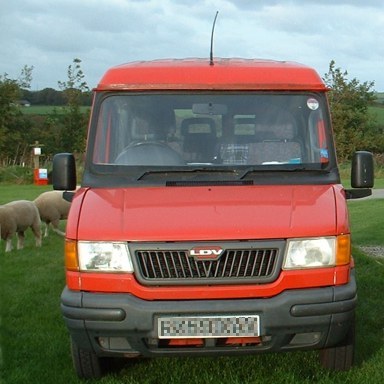
That's a near enough diagram of your hydraulic system so you get an idea (I assume your Pilot is similar to mine from your photo).


*********
*********
note: I try the best I can to follow professional experienced mechanic guidance and advices but I'm NOT a qualified mechanic, this is what I figure out as I work on my vehicle using all available help around me, real people, written manuals, online videos etc)

Tuesday, May 3, 2016

A procedure to remove Burman 30-370 steering box on LDV Pilot 2003 (400 serie with DW8 peugeot engine)

Pilots' pilots.
Here is my two cents procedure and suggestions to remove your steering box on your own.
This is a long post so here is the start of it and I'll finalise it when I'll get more time.

Tools


  • Jack
  • 3 axle stands (one to support engine)
  • copper hammer
  • pitman arm puller
  • ratchet
  • 3/4W socket [drop arm]
  • 22mm socket [tie rod end]
  • lump hammer
  • 13mm spanner/socket
  • 14mm socket
  • 17mm spanner
  • 10mm
  • hex key [vaccum pump]
  • oil cap and container
  • tipex corrector
  • manuals (available free on LDV files)

First and foremost, immobilise your vehicle properly and don't go under until it's firmly and steadily set up on axle stands on a flat surface because since you have a van there are people who need you and they won't like you anymore if you are as flat as a pancake because it dropped onto your face as you were working under it to repair it. Stay in shape, make it stable!

Lift up front of van high as to have enough room for arm movements.
Take off driver side wheel.
Take down tie rod end from drop arm
method used: Bang Bang (see pic) but on the right spot (see other pic)


other methods: fork etc will write up later

Take down drop arm
method used: Pitman arm puller (less than £10 online)


other methods: 
Heat drop arm around shaft (risk! Not so much as to melt seal inside).Hit both side of drop arm with similar lump hammers.
will write up later

Get caps and empty containers ready to stop and deal with oil spills.
Unscrew 2 pipes from box (from reservoir and from high pressure supply pipe), leave short pipe on as it’s connected to box only. Leave to empty itself.

In cabin, remove dashboard part under steering wheel (and around ignition barrel?).
In engine bay, put steering column to straight and mark placement of shaft with steering column coupling shaft to remember (I use tipex corrector) [check manual around this issue as I think it can be worked out in some other way when refitting but always good to make marks in case it helps] and remove completely pinch bolts from steering wheel shaft.


In cabin, support the steering column and remove the 2 nuts and plate that hold the column (note that here you might have to remove a plastic part that connects the shaft to the body where it goes through to the engine bay. I think I read it’s recommended to do this before removing the nuts and plate - it’s broken and missing on mine so I didn’t have to). No need to disconnect any but watch out for cables and not to reap any off.


plate/bracket supporting column above


broken bit on mine

steering column coupling shaft out from steering box upper shaft (above)

Pull shaft up until about 3/4 inches are left on engine bay side (or whatever is enough to get steering column coupling shaft out).
Disconnect the high pressure supply pipe from the engine crossmember (clips)
SUPPORT THE ENGINE PROPERLY (see manual and pancake story at beginning of this post)
and undo the 2 bolts and  the plate at bottom of steering box.


Remove 3 bolts holding steering box.

Remove the vacuum pump (very easy 1 bolt, 1 hex bolt)


Getting the box out.
Method I used:
Get a copper hammer (thanks Tony Norbury for this and many more tips) and hit at the bottom of box on the side facing the back of the van.


That should rotate the bottom of the box upward toward the front of the van
so you can access the 2 bolts of the box lower mounting fixing where the crossmember was connected.

At the start I did hammer the box down from the top, hitting on the place where the hole for the right hand top bolt was (when still in place) This made it rotate a bit more but not that much and it was noisy, exhausting and not so efficient so I came up with the following solution.


This is what I called the Gap of Hope. The rotation started showing some progress. and my biceps to cry.
Also the lower little white arrow show where I was hitting to rotate the box in the opposite direction.

Get a L-shaped bracket (thick metal) with a hole of similar size to bolt. The shortest the short side of the L shape is the better I reckon, and the longest the long side is best too but not crucial as it can be extended.
You should also find a short bit of metal with similar thickness to even up pressure from the side of the other bolt - so as not to bend the original plate.
Bolt this bracket and the short bit under the plate where the crossmember was.


You have made yourself a lever and you can now rotate the box indefinitely until it comes out.
Lubricant where/when possible helps. There was quite some rust around mine.


You can remove the box one out from under through where the vacuum pump was.


Think the box outside.
Done.
Amazing power of the mind.

Many thanks to all from Club LDV who have helped with ideas and suggestions all throughout.

Now for the refit...

Sunday, April 10, 2016

Assume nothing but TEST everything! Parasitic draw test, relays, glow plugs, earth connections, etc

Check your earth connections first!
and assume nothing but test everything!

Preheating - glow plugs control unit and relay
(9639912580-G CARTIER) - Pricey when new but can be found second hand and tested
for a LDV Pilot van (DW8; it fits many other vehicle, check for yourself)


Once more it was the earth, the same battery earth that was causing the engine not to start.
I had readjusted it a few days before the engine went and it looked fine.
For this reason I looked at everything else, read all the manuals, cleaned all possible connections (even bought a replacement Preheat control unit), performed a parasitic draw test for all fuses and relays; checked all fuses and relays (post with video on checking relays here).


Eric the car guy explains how to perform
a parasitic draw test
in the above video.
This is what you need to do if your brand new battery keeps going flat overnight.


If need be one has to check the various relays of the vehicle.
This video is probably the best and most complete one on the topic on the tube.

and in the end as I was doing the test, seeing that I had no draw and being clueless.
I thought I've been cleaning up everything electric around so let's just undo this battery negative earth connection, clean it and grease it up.
Next thing the van start (with a tongue in cheek look).
Made me feel like an idiot but as long as it started I'm happy and delighted I learned so much about my van's and 12V systems in general!

[EDIT:] It never was the battery neg earth connection. Today (2 months later) after the van having sat under torrential rains for a couple of days, it refused to start and displayed the same symptoms: Glowplug get on but clicliclic noise and no start + funny warning lights going on by itself for a while.

I am 99.8% sure it is due to a faulty relay (probably the warning lights one).
I am gonna do a thorough check of all relays as in the video above and replace the bugger one.
For the time being I'll have to try to park on the other side of the vehicle because I believe when the road is bent and the van lean on the left, the rain water drips in and humidity accumulates, causing the relay to malfunction.
The van starts fine after a while (me doing long parasitic test, cleaning the relays and looking for the fault every possible where), hence that relay must be drying and when it's dry, everything is fine.

Thursday, July 2, 2015

LDV Pilot and Convoy vans - Basic advice on replacing the kin pins

How and what tools do you need to replace the king pins on a Pilot or a Convoy LDV van?
In 2 posts, quoting from auto banter:
external usenet poster
Posts: 70
Default LDV pilot - convoy

Whats the going rate for a king pin change - mine needs doing and I
swore blind never to do another myself ;-)

Also, is front axle same off convoy, can get a complete one with new
pins for £100.. seems like a much nicer option!

  #4 (permalink)  
Old October 12th 09, 10:32 PM posted to uk.rec.cars.maintenance
external usenet poster
Posts: 41
Default LDV pilot - convoy

Pins are only £29.. which makes up for the fact you either take the axle
off and take it somewhere with a press, or spend three days with a
sledge hammer beating the fcuk out of it...
(3 days? Some say a week)

  #5 (permalink)  
Old October 14th 09, 11:53 AM posted to uk.rec.cars.maintenance
external usenet poster
Posts: 1,691
Default LDV pilot - convoy

a big air hammer takes them out in seconds. 
(Don't forget to grease them well)

Wednesday, July 1, 2015

LDV vans forum - Alive and quicking!

About 3 years ago when I got my Pilot I used to look up two forums set up by LDV vans, sherpas etc owners and lovers. These were the only forums available online and were very useful.
Unfortunately soon after I joined they all disappeared. I took up the task to set them back up and archive some of the best tips and most useful conversations on the then newly set up fb LDV groups.
My archiving was slow as it takes a lot of time to search on the fb group page for posts that keep disappearing in the scrolling down system (*#@%$?!!!).
However few admins from the ex-sites took over and slowly but surely new members registered.

I was delighted today to see that it's well alive and quicking!

LDV lovers, Join up our forum!
http://ldvsherpauk.prophpbb.com

The advantages over fb is that you can look up the infos without having to scroll down for ghost-posts (I'm gonna call them that), it's always there for you. The search option is much easier to use than fbook.

Thanks again to the admins who are taking care of the forum.

Saturday, May 2, 2015

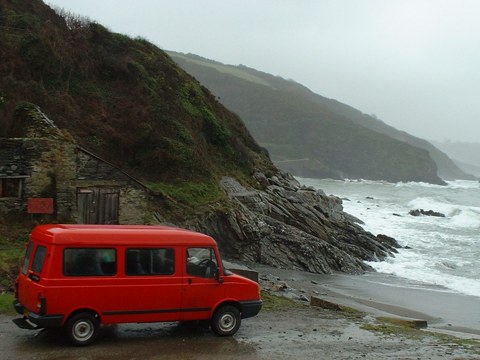
LDV Pilot van love :)

This is what I found cruising randomly on the web.
A sweet few nicely done webpages about a LDV Pilot from 2002 with good images
where the van seems to be the star of a movie!

I had to feature it here.
Thank you Timothy Birt.

It also has a wealth of information about sustainable energy (campervanners!boaters!) and much more.


(All credits for images and website to Timothy Birt)

Thursday, September 18, 2014

The basics of engines: the intake manifold

I keep learning about how engines works because I'm determined to educate myself about the topic.
This is a good site that explains lots about engine components.
There are many more good well illustrated articles but this one is about the intake manifold.

Friday, September 12, 2014

Sunday, July 20, 2014

LDV files

https://www.facebook.com/groups/ldvfiles/files/

from LDV files on fb

Thanks Michael!!

Tip - Easystart alternative...

"Tip, instead of buying a tin of easystart £4, a cheap tin of air spray/lacquer,antifreeze does the same

Brake cleaner works as well.
(from Club LDV)

Pilot radiator - what fits in for replacement if dont have the original?

"Guys over on Club LDV it was asked about rads , ie did any other model fit , after looking at some forums for a convoy a vauxhall astra 1.7 or TD should fit fine - as for a pilot it was the peugeot 405 - so if anyone does try this can you let us know if they are compatible please"
(thanks Michael Mc Donald from LDV files fb group)

THE way to clean up old dirty oil (vegetable oil)

" After a decade running WVO on the same engine [now heading for 400,000 in my Pilot] I have found THE way to clean up old dirty oil. After a long time settling and only drawing off above the 'gunk line' treat yourself and buy a centrifuge, NOT a small spinner, they're useless. Get a decent machine such as one from usfiltermaxx, not cheap but wow are they fast and efficient. You can easily clean 50 litres in an hour and the oil comes out like lager. If you'e not using twin tanks thoroughly mix with diesel before you spin it, I use a commercial stick blender. Although I always carry a spare filter I've not changed mine in the year I've had the machine and no tell-tale signs that I need so to do as yet."

Thanks to Beryl
on http://ldvsherpauk.prophpbb.com
(http://ldvsherpauk.prophpbb.com/post307.html#p307)

Almost any Diesel engine can be run on SVO

Almost any Diesel engine can be run on SVO (Straight Vegetable oil). You will need to know a few things however before you pop down to the supermarket and fill up on rape seed oil.
The type of injectors you have, the pump, the money you have to spend and the time of year will all play a role in the type of conversion you need. You are going to be faced with a few decisions and there are a few things you need to know.
1 Running on cooking oil fresh or not isn't free. You need to contact Customs and Excise and get yourself form EX103 but only if you use more than 2500L a year. You need do nothing unless you use more than 2500L in a year. With this you can register as a fuels producer. Each month you will be sent a form to declare how much oil you have used. You return this and payment to HMC&E and your all legal. You need do nothing but keep a record of your use if you use less than 2500L in a year.
2 Make BioDiesel or just use straight oil? Whichever you decide there is an abundance of information free on your favourite search engine. 'Search for Running on cooking oil' 'SVO' 'BioDiesel. Read everything you can. I know there is so much of it and most is conflicting. If you decided to go BioDiesel then read no further. Once you make your diesel fill up and go but remember Bio Diesel is more acidic than diesel but you will know this if you have made some. You may need to heat this in winter to allow good filter flow.
3 Ah you’re like me! I read the Bio blurb and decided I’m not a chemist and it all looks a little complicated. Ok decision number 2 SVO, WVO a mix perhaps. OK SVO straight fresh from the shop oils at 56-90p a litre. If you chose this then you are interested in the carbon neutrality and sustainability of running on veg oil. WVO mucky old used veg oil. Ok so you like the idea of saving the planet but want to save a few bob as well. Nothing wrong with that.
SVO Buy the cheapest oil you can rape or sunflower and that’s it.
WVO Collect your dirty oil from friends, restaurants, the local tip or wherever. Buy yourself a big bucket and a 5-micron sock filter (There on Ebay and very reasonable, No I don't sell them). Hang the sock over the bucket and pour your oil in the sock. Empty the bucket into containers. That’s it. Or perhaps a pump filter, costly but high output.
Small point but used oil is thick or solid; more so in winter. Try to collect liquid oil if you can. That is liquid at outdoor temperatures. This will be quicker to filter, easier to handle and wont set like lard in your car. The filters can be washed when they get blocked.
4 Ok so you have your 50 litres of clean or filtered oil what now? Now we face the biggest question of all, duel tank or single tank. They both have for and against. Duel tank can be expensive, hard to fit, you still need Bio or Diesel to start them but they do pose a lesser risk of wear on the injectors, pump and engine and are more suitable for Lucas pumps and HDi cars. Single tank can be cheap, harder to start in the cold and will wear the engine, pump and injectors quicker than a duel tank. How much quicker nobody yet knows. You need to decide which option you prefer.
Twin tank set-up
2 tanks. 1 with the oil (probably water heated if your smart) 1 with bio or diesel for starting and stopping on. A fuel switch, 6 port is probably the best. A switch and purge reminder (not essential). A heat exchanger (water, electric or both, discussed later) and probably a filter along with meters of hose and connectors to connect it all in with. Throw this lot at your best mate because he said you should go veg powered. Once fitted you start the car on bio or diesel. Once the coolant water is heated and the car warmed up the oil should be up to operating temp so you throw the switch and you’re a Greene unless you have already got to where you were going. At the end of the day or if you are leaving it for the day you need to get the oil out of the injectors and pump by purging with Bio or Diesel. Not very good if you are just nipping up town for a loaf of bread and a paper!
Single tank set-up
A heater. No honest that’s it. You need to heat the oil so it is thin like Diesel. You can do this electrically or with the coolant water or even both. Like I said before it does add to the wear and tear of the engine starting on cold veg but its quick and easy and very cheap.
You have 2 ways to heat your oil in the twin and single tank conversions. Electrically, plug in to the mains with a block heater, use a glow plug heater, use a 12v resistive wire heater. With water use a heat exchanger, hose on or hose in hose coil or a plate heater.
Ok there is a bit more to it. You will need to add some diesel to the oil in the single tank This is very important in the winter as the Diesel will help you to start in the morning and stop the oil from becoming a big block of lard in your tank. Water heaters take a long time to get hot so with the single tank conversion you should go electric as they heat very quickly. You can use water to supplement the electric but until you get it started there will be no warm water. You should add injector cleaner now and again. This has two benefits, first it helps remove any deposits from the burning of cold veg oil and it has a centane improver. (Centane is the opposite of Octane. High octane burns easy. High centain resists burning) in a diesel a high centain number is a good thing. Now that’s all there is to it.

A few things I just remembered. You need a good battery and alternator to go electric heating. Watch out for kits using copper, as it seems to react with WVO. If you are on a single tank start with a low mix of oil to diesel and work up. Whatever way you go make sure you change the oil and filters regularly. NO I mean it, you will regret it if you don’t.

Oh and the most important thing of ALL. When your done go to the nearest motor shop and buy 3 chrome letters about £1.50 each B I and O and add them to the badge on the boot. Now everybody will know that 'Your doing your bit for carbon reduction'

Saturday, September 7, 2013

LDV Pilot workshop manual

I've ordered one and I'm going to make it digitally sharable.
Also I've  LDV workshop manual for older vans than mine <2002/2003.
It's got files about the convoys, the XUD9 engine.

Monday, September 2, 2013

LDV Pilot van - Evolution overview


source: wikipedia

1999 LDV Pilot
Manufacturer LDV Limited
Production 1997–2006
Predecessor Leyland DAF 200 Series
Successor LDV Maxus
###

LDV Pilot (1993–2006)

###

Leyland DAF 200 Series (1989–1993)

###

 Freight Rover 200 Series (1984–1989)

###

Sherpa K2 Series (1982–1987)

Manufacturer Leyland DAF
Also called DAF 200 Series
Production 1989–1997
Predecessor Freight Rover 200 Series
Successor LDV Pilot

###

Sherpa (1974–1982) 

Manufacturer Freight Rover
Production 1982–1984
Predecessor Leyland Sherpa
Successor Freight Rover 200 Series


Manufacturer British Leyland (Austin Morris)
Also called Morris Sherpa
Production 1974–1982
Predecessor Morris J4
Successor Freight Rover Sherpa

Sunday, September 1, 2013

LDV Pilot van - Fixing the starter motor

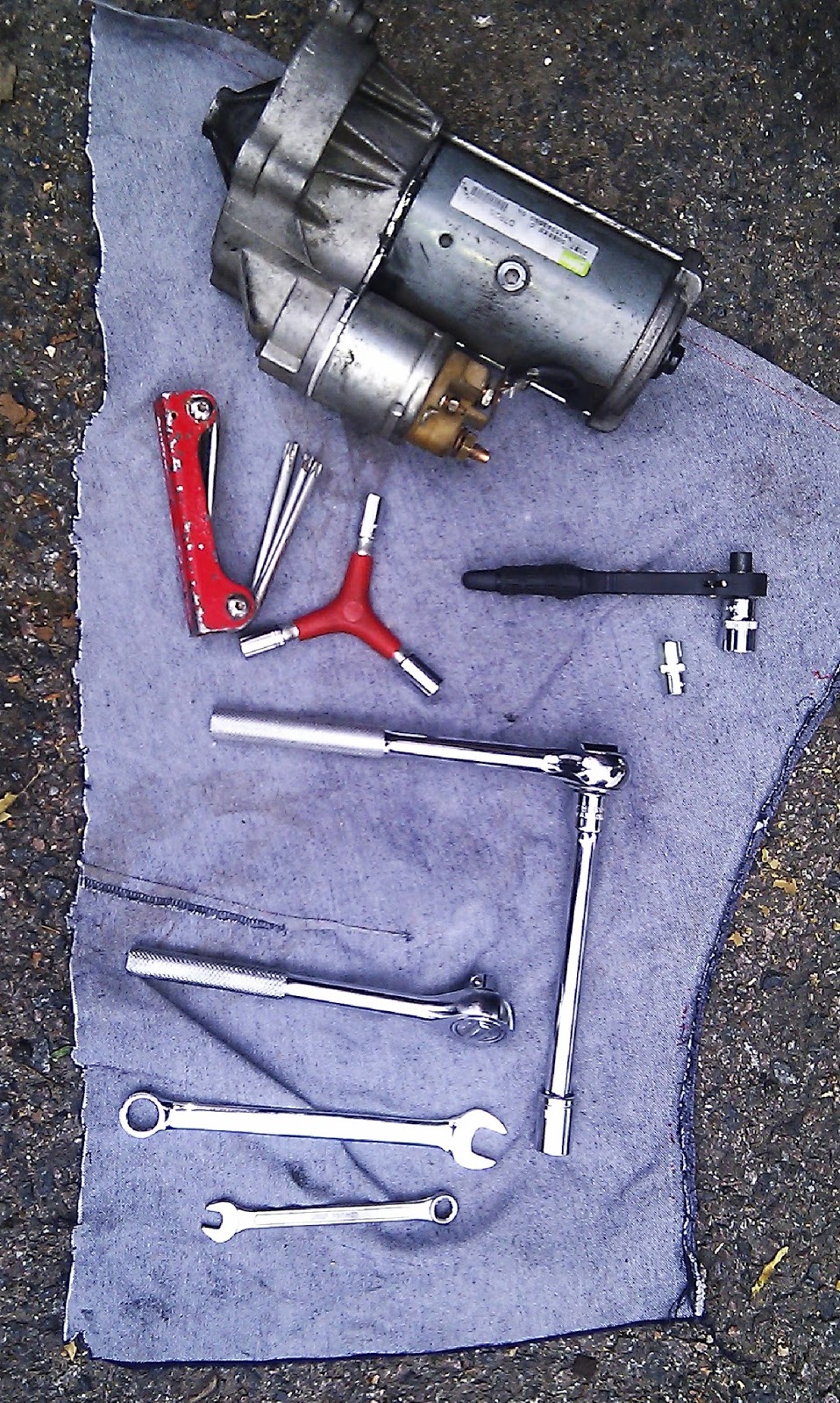
Today I took it down.
Here are a few pics of the necessary tools and how it look slike + cable connections...

BEFORE YOU DO ANYTHING, DON'T FORGET TO UNPLUG THE CABLES FROM YOUR BATTERY (at least the Positive one +, red).
Also when working with electric parts some use glasses and gloves. Gloves are good when they fit just to protect skin from cuts and dirt.
Lastly if you need to work under the van like me, glasses are useful to avoid dirt in the eyes but also remember to hold parts as you unscrew them so they don't fall on your face in these enjoyable awkward positions we have to get into.

Tools you need


8 and 13 is all you need but in different shapes.


These are good once you are going to open the motor up.


Check your connection before you take them off and find a way to remember what they were.


There is only these 3 bolts to take off but they aren't all easy to get to.
That's when the extension comes in handy.


 Solenoid


D7 R26 is the part number if you need to order a new/used one


I opened the motor today and the brushes are worn (+ one spring sprang out and it'd take me hours to find it back) out so I'm just gonna replace the whole part cause i've no time and no gear to solder new ones on.
Although this mechano shows how to do it and I'll have to do it later so I can fix the motor and sell it or replace the used one I got and sell it.


Then I tested and mounted the motor I purchased. The engine cranked up and off I went for 10 min. I parked and again, back to nothing but the click of the happy egoist solenoid. Unmounted and tested and remounted the motor, cleaned motor connections. The engine goes and stop and refuses to go again. nothing but solenoid. (30£ and time spent for nothing).
I started to think it's due to the ignition or some relay.
I took down the dashboard (I'm very curious).
I learned how to test 4 pins relays (testing relays post here) and did it to all since I couldn't find online which relay was the ignition switch one. I bought a new 5 pins relay thinking it was the defectuous one (and ignition one) cause there was water in it but wrong again and minus 15£ and time running around (Pilot parts aren't easy to find!) and time running out for the little moving job I needed to do.
Next day with a quieter mind. I wrote down all the stuff I knew worked, the stuff I knew didn't work, the stuff I needed to check to keep things clear and methodical.

1. The click noise means a healthy solenoid and enough current through the ignition and relay is working
2. Looked online and managed to read the wiring diagram of the van from a video advertising online (also bought the pilot workshop manual but it takes a few days to be delivered).
3.Ignition relay is the second one on the lower level on the passenger's side. It worked.
4. The main fuses (50Amp) are all fine.
6. Found that current wasn't going from battery positive knob to battery positive cable when plugged.
7. cleaned the cable proper, pushed in the bits that were sticking out.

The starter motor went spinning and the engine started!

Only one thing to say:
If you hear the solenoid click noise,
check your connections well with a voltmeter and a friend turning the key in the order shown in the video.
I'm thinking of putting that info in images and writing here in case that video goes down the utube plughole sometime.

LDV Pilot van Parts

starter motor

http://www.rockauto.com/catalog/raframecatalog.php?make=LDV&year=2003&model=PILOT&a=Ad%2BCode%2Bwww.google.co.uk%2B

used ebai

ebai used

UK ebai